.svg)
Built for primary care
Ten minutes with a menopause patient. You cover hot flushes and periods. Because that's all there's time for.
And eighteen months of history that's never quite in one place.
Silvia structures the patient-reported picture before the consultation begins, so the time available goes into the clinical conversation, not rebuilding context from scratch.
Built to support clinical judgement. Not replace it.
Built for primary care
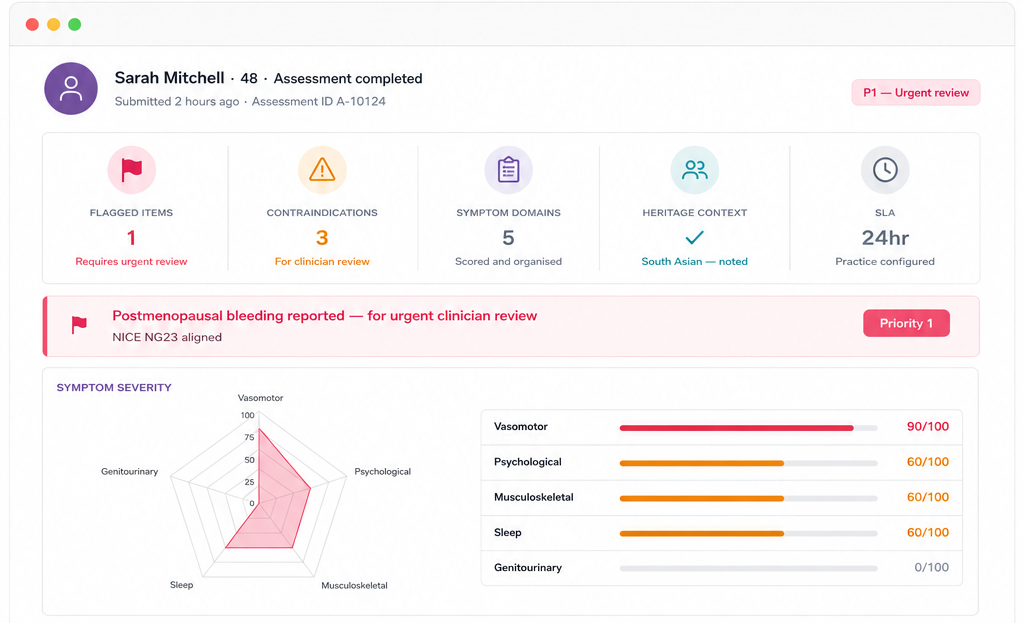
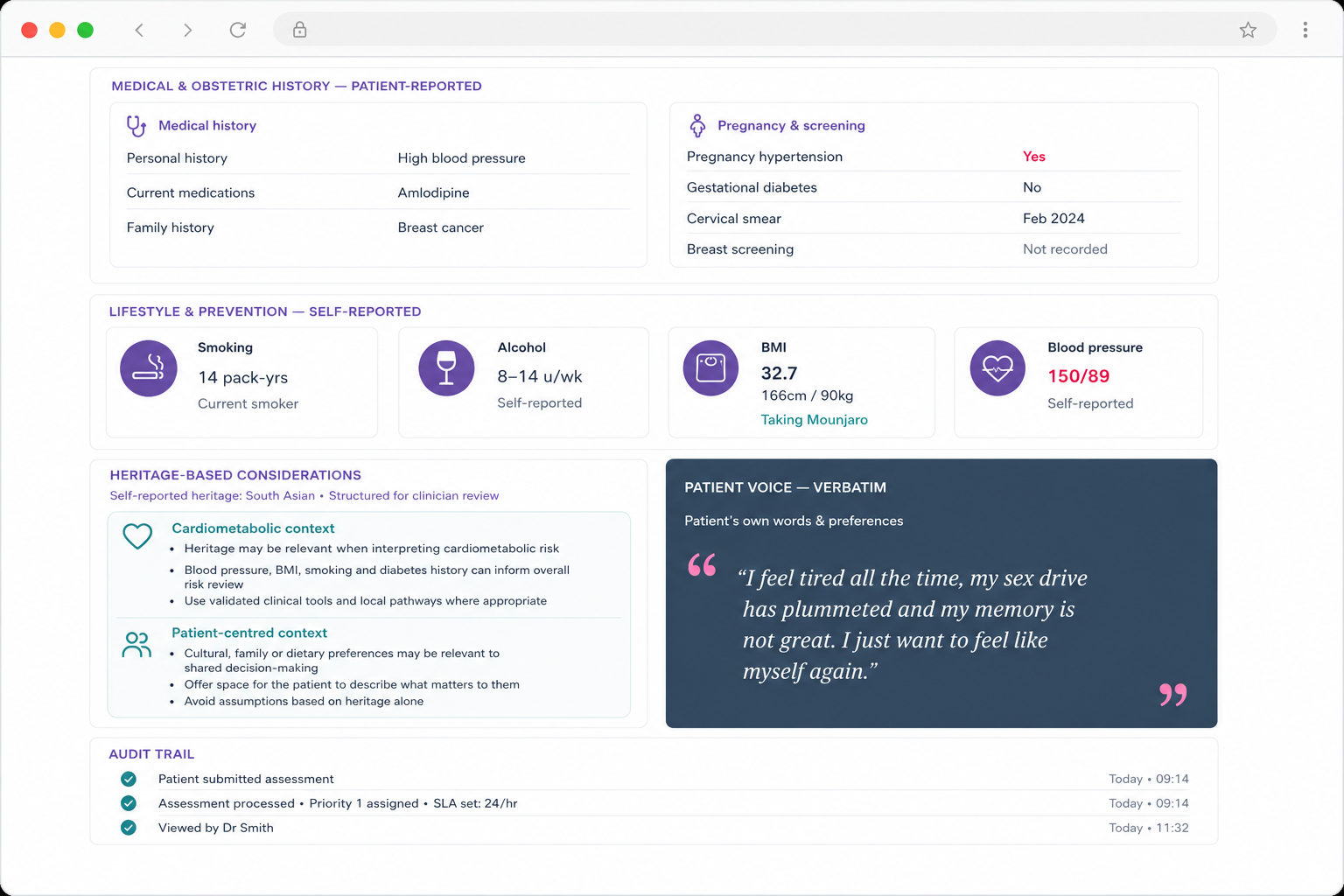
What a structured menopause assessment can capture, before the consultation begins.
Menopause touches cardiovascular risk, bone health, mental health, genetic cancer risk, obstetric history, heritage-informed considerations, and genitourinary symptoms. Most consultations don't have time to cover all of it. Silvia structures it across 70+ clinical considerations cross-referenced before the patient walks in, ready even when appointment time is short.
The patient-reported context. Not just the presenting complaint.
70+
clinical considerations, structured before every consultation
QOF aligned
The QOF documentation is already done.
Every Silvia assessment captures smoking status and whether cessation support has been discussed, structured against QOF SMOK002 and SMOK003. It's there in the summary for the clinician to review and record.
SMOK002
Smoking status captured in every assessment
SMOK003
Cessation support offer documented
Captured alongside the consultation, ready for QOF documentation.
Practice-configured triage
Your rules. Applied to every patient. Before anyone opens the queue.
Your practice configures what's urgent, who it goes to, and what SLA applies. Silvia applies those rules to every assessment, automatically. Every patient. Without exception.
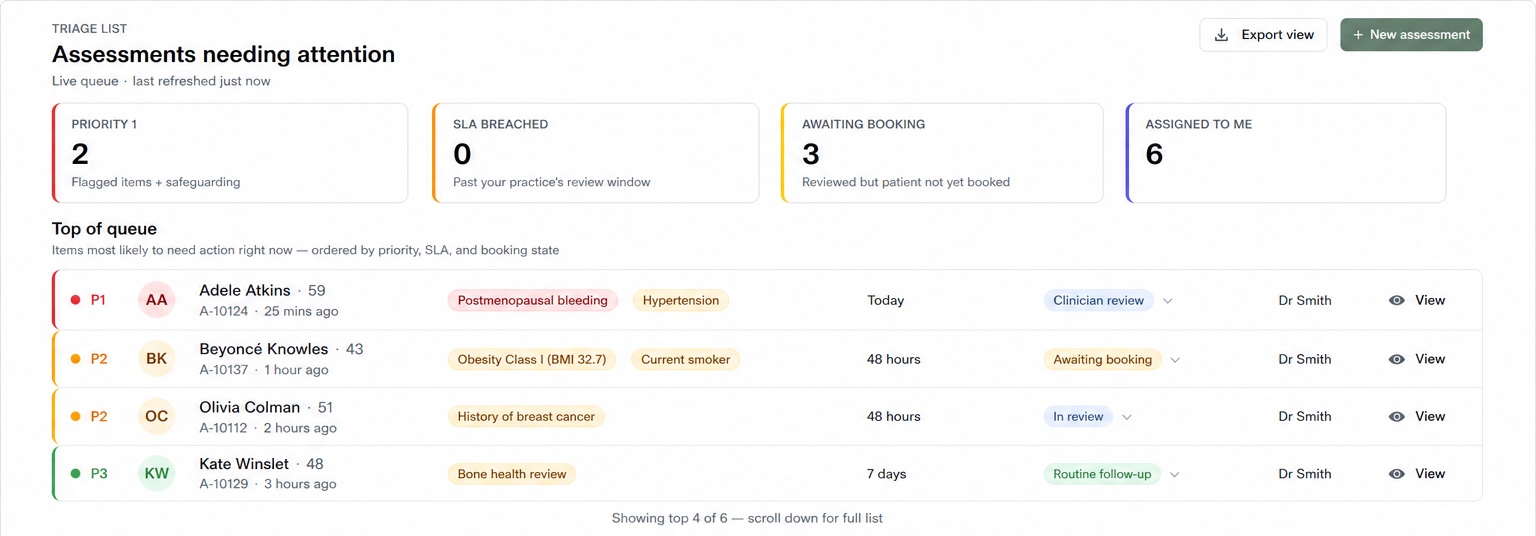
An NHS practice may configure
These are illustrative examples only. Each practice configures its own rules. Silvia applies them. No clinical pathway is recommended by Silvia.
Patient responses match criteria your practice has configured as urgent.
PRIORITY 1, Surfaced for clinician review, practice-configured SLA applied
Between appointments
In primary care, patients rarely see the same GP twice. The follow-up that actually follows up.
Patients track symptoms, treatment response, and changes between consultations. When they return, whether that's six weeks or six months later, the GP can see what's changed since the last review: symptoms, treatment response, and what the patient has reported.
No starting from scratch. No relying on what the patient can remember to tell you.
The structured summary means I can review a patient's full clinical picture in under two minutes. I know what I'm walking into before they sit down.
Dr Nabeel Arshad, NHS GP Partner, Brooke Surgery
Early Access Programme
See what Silvia looks like in your practice.
We're working with a small number of NHS practices now. Get in touch and we'll show you exactly how Silvia would work in your setting, and how it fits your existing workflow.