.svg)
Built for private specialist care
Your patient filled in your intake form. You know the symptoms. You don't know the full picture.
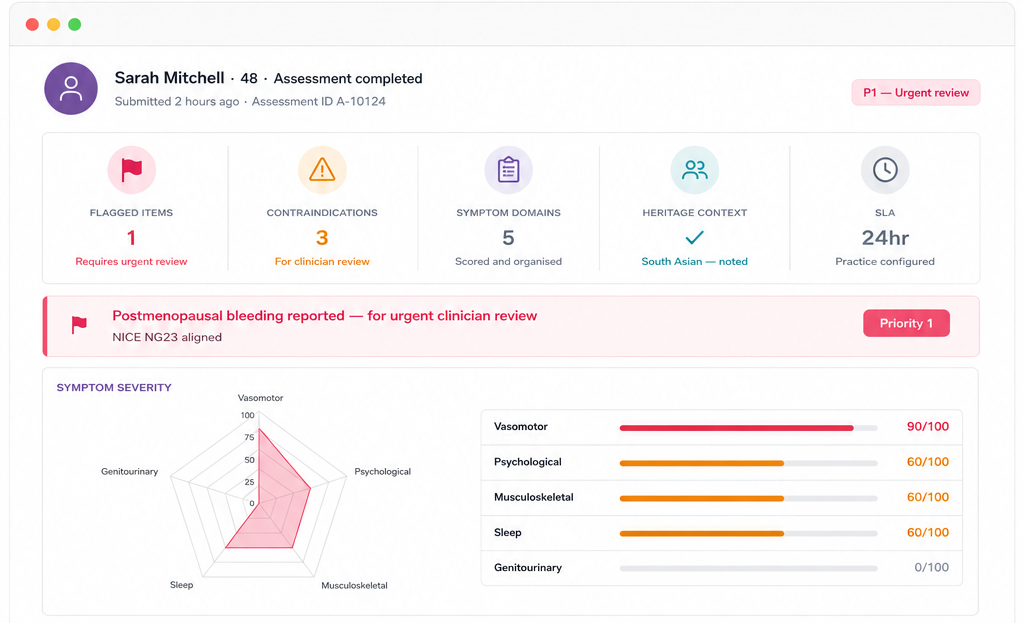
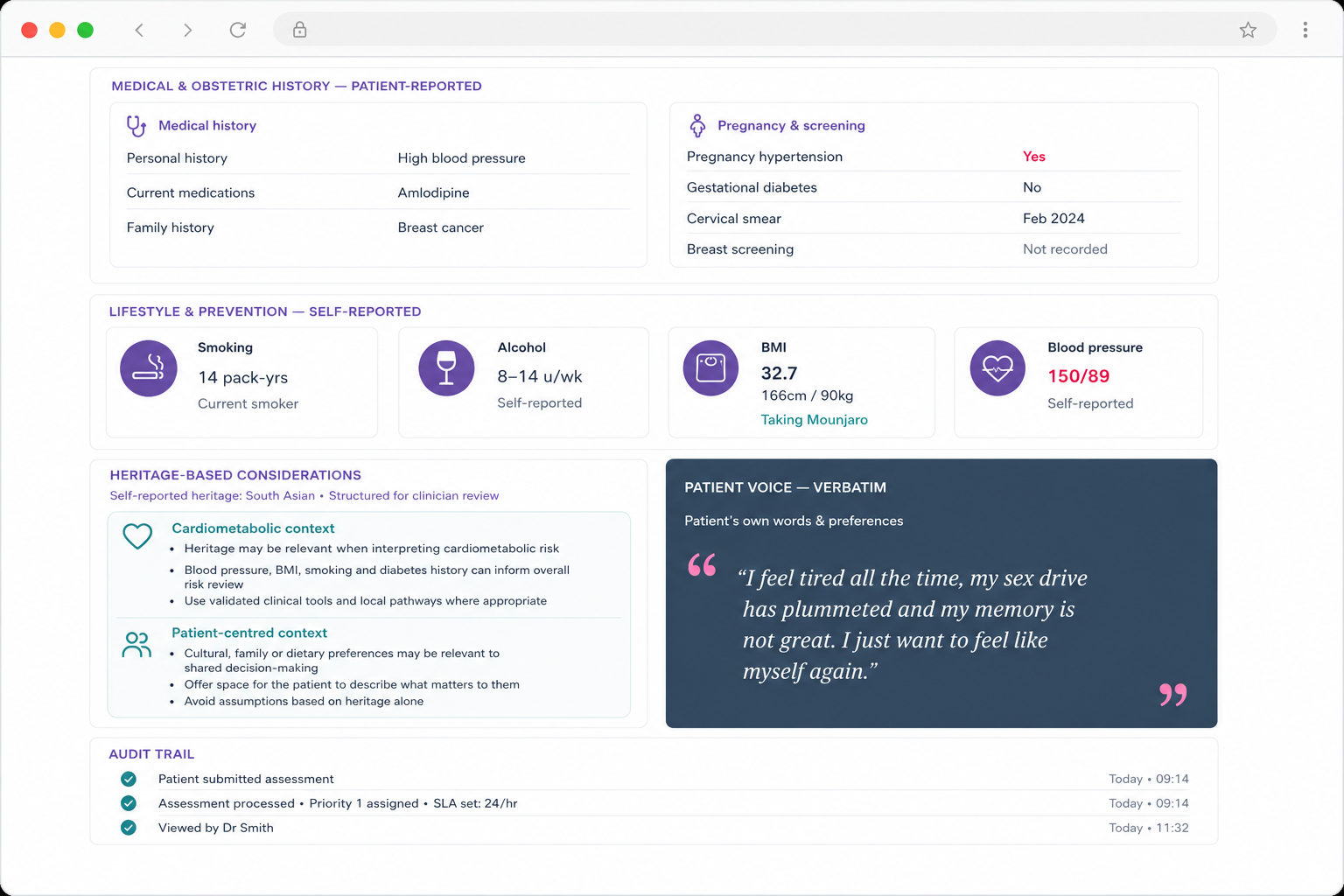
Cardiovascular risk, family cancer history, obstetric history, heritage-informed considerations, and what's changed since the patient last sat in front of you. Silvia structures the complete picture before the consultation begins, and keeps it building across every visit. So every appointment starts at depth, not at assembly.
Silvia captures the patient-reported picture, before the patient walks in, and keeps the thread alive until they return.
Built for menopause specialists
Everything your clinical experience tells you to ask. Structured before the patient walks in.
Silvia is built around the clinical reality of menopause care, not just symptoms, but the patient-reported picture, structured across cardiovascular risk, family history, obstetric history, heritage-informed context, and treatment preferences.
70+
clinical considerations, structured before every consultation
Patient safety, structured
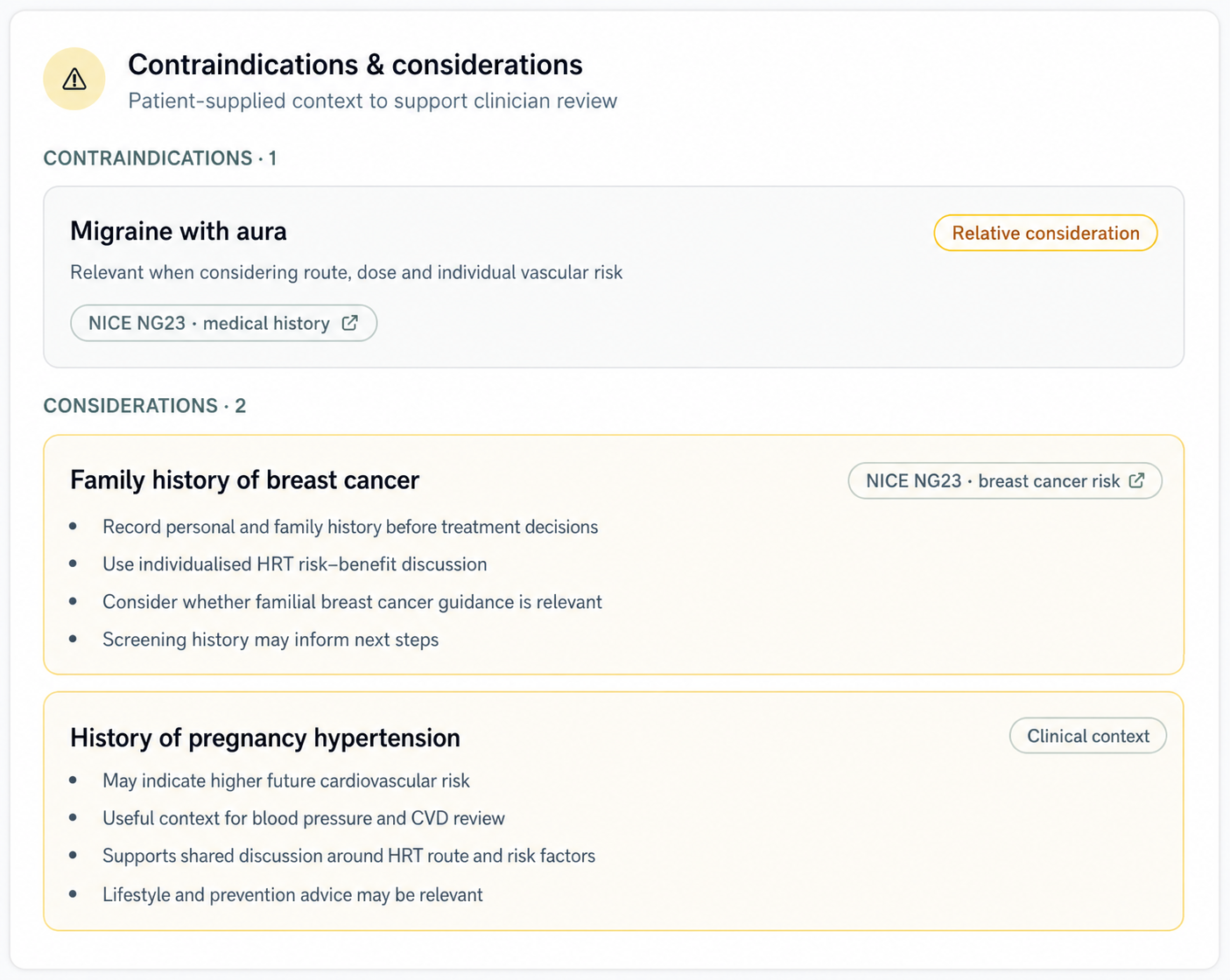
Contraindications surfaced before the consultation begins.
Where a patient-reported answer matches a contraindication criterion, it is surfaced and labelled for clinician review, before the consultation begins. Not buried in notes. Not mentioned as an afterthought. Already there.
Practice-configured intelligence
Your rules. Applied to every patient. Before anyone opens the queue.
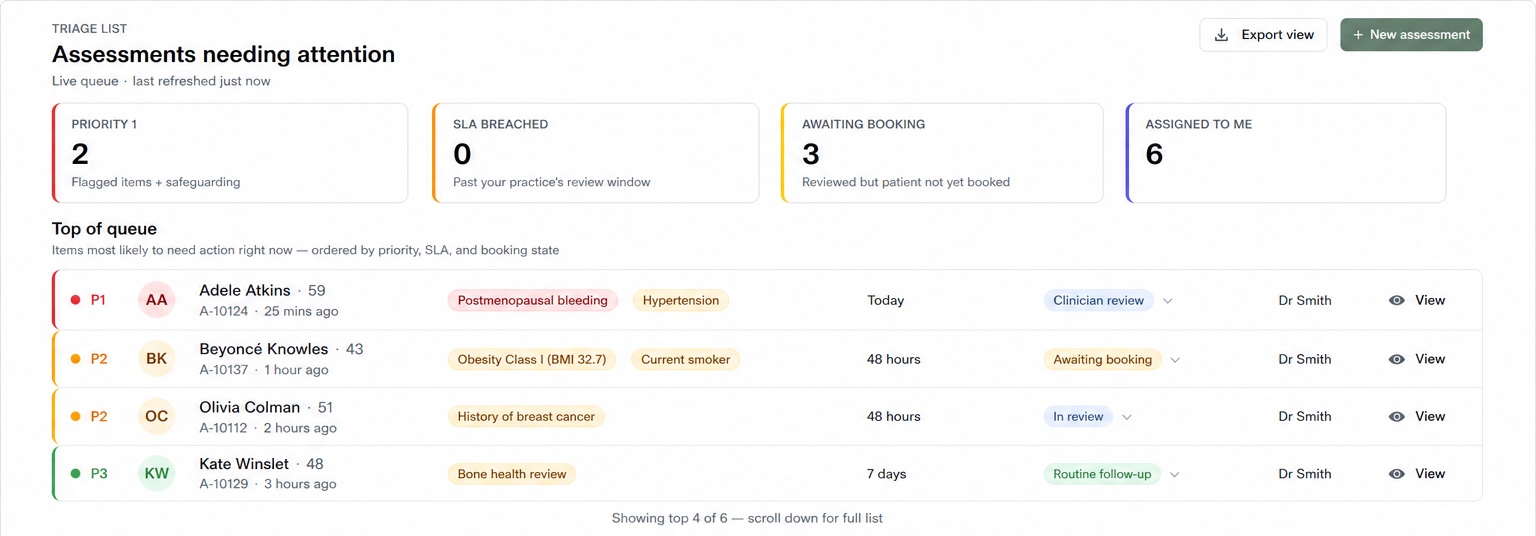
Silvia doesn't come with a fixed definition of what's urgent, what needs reviewing, or what gets routed where. Your practice defines that, once. Silvia applies it to every assessment, every patient, automatically.
Before Silvia goes live in your clinic, you configure your clinical rules. What's urgent. Who it goes to. What SLA applies. What gets routed for review. From that point, every patient assessment, whether submitted at 9am or 11pm, runs through exactly those rules. Automatically. Without exception.
A private clinic may configure
These are illustrative examples only. Each practice configures its own rules. Silvia applies them. No clinical pathway is recommended by Silvia.
No black box. No Silvia deciding what matters. Your clinical logic, applied automatically, to every submission.
Talk to us about your clinicThe patient experience
The patient arrives feeling expertly known, before a word is said.
A patient choosing private care expects something better than what they've already had. Walking into a room where the clinician already understands the patient's history, priorities, and what's changed since the last visit tells the patient this consultation was worth paying for, before a single question is asked.
Before the consultation
The patient completes a guided assessment, structured around what menopause specialist care actually needs to know.
During the consultation
The clinician already knows the patient's history, priorities, and picture. The conversation starts at depth, not at data collection.
Between appointments
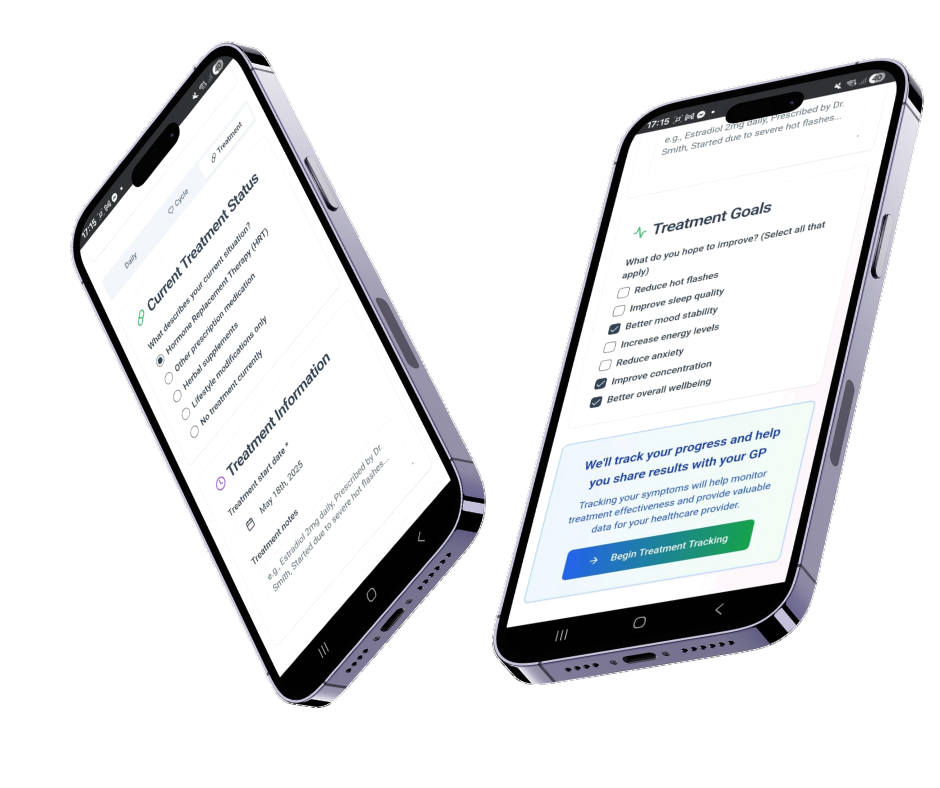
Structured check-ins keep the thread updated. Symptoms reassessed, treatment response captured, new history added.
The patient arrives prepared. They leave knowing it. And it's part of why they come back.
Built to scale with you
The patient comes back. You're not starting again. You're continuing.
Most specialists have good systems for recording what happened in a consultation. What's harder is arriving at the next visit with the clinical picture already connected, cardiovascular risk, family history, heritage-informed considerations, what's changed between visits. That synthesis usually happens cold, in the first few minutes, while the patient talks.
Silvia does it before the patient walks in. The patient-reported picture, structured at every visit, connected across visits, ready before you sit down. Without spending the first few minutes rebuilding it.
At 3, 6, or 12 months, whatever interval the practice sets, the patient completes a structured check-in. Symptoms reassessed. Treatment response captured. New history documented.
Less re-gathering. More continuity. A stronger relationship with the patient over time.
Silvia Health has the potential to change the face of menopause care, forever.
Dr Tony Bairstow, GP
Early Access Programme
See what Silvia looks like in your clinic.
If you'd like to see what Silvia looks like in your practice, how the assessment view looks, what the consultation view shows, how it fits your existing workflow, start a conversation. No pressure, just a genuine look at whether it's right for your clinic.
Silvia is designed to support clinical judgement, not replace it. It captures and organises patient-reported information across 70+ clinical considerations for clinician review. It does not diagnose, prescribe, or automate clinical decisions. Silvia is preparing for registration as a Class I medical device with the MHRA.